
It started with Tom’s great grandad
Tom Arnott’s great grandad was the first of the family to work at this school. He was with another firm back then, looking after the heating and plumbing.
That was more than ninety years ago. Four generations of the family have worked on the same buildings since.
Arnotts & Co has been going since 2018. What we know about this site goes back a lot further.
From a dripping tap to a full plant room
The work we do there runs from fixing a tap or a toilet to a full plant room overhaul.
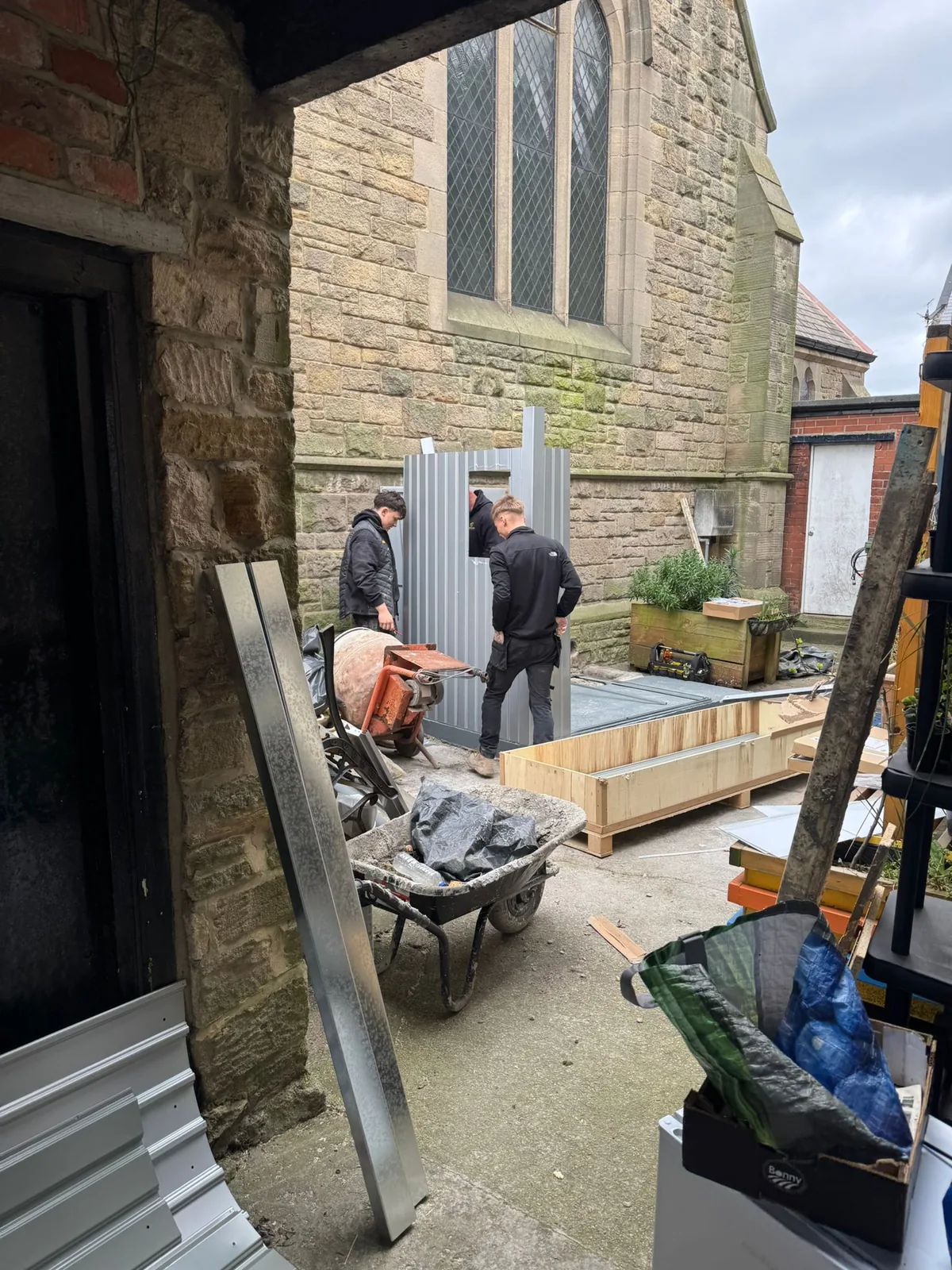
The plant room was this summer. It was done in the holidays, while the building was empty.
It’s the same people either way. That matters more in a school than most places. The site team don’t have to work out who to ring for what, and whoever turns up already knows where the stopcocks are.
Every trade, one firm
Heating and plumbing is still the core of it. Boilers serviced, gas safety checked, leaks found and fixed. More on commercial heating.
These days it’s the other trades too.
We fitted the new bathrooms in the sports block. All of it: the cubicles, the plumbing and the lighting. That’s joiners, plumbers and electricians on one job, and all of them ours.
Nobody was waiting on a second contractor to finish what the first one opened up.
Keeping the water safe
If you’re responsible for a building, you’re responsible for the water in it. Cold water storage tanks have to be inspected, and cleaned and disinfected when the inspection says so. That’s ACOP L8, and it applies to a school like anywhere else.
We drain the tank down, strip out the debris and biofilm, scrub the base and walls, then disinfect to the required concentration. Flush, refill and sample.
A school gets before and after photographs, the chlorination record and the sample results. Filed and dated, so when someone asks, the paperwork’s already there. More on water tank cleaning.
Working in a school
Two things come before the job itself.
The first is qualifications. Gas work is done by Gas Safe registered engineers and electrical work is NAPIT registered.
The second is who’s on site. Every engineer is DBS checked and briefed on safeguarding before they set foot in the building.
Then there’s the calendar. The big jobs go in the holidays, like the plant room did. The testing runs on a fixed cycle. And when something goes during term, we work around the timetable. See how we work with schools.
Why planned maintenance costs less
Ask Tom what he’d tell any school and it’s this:
“The key to saving money and preventing breakdowns and call-outs is to maintain the building properly. Planned maintenance solves issues before they happen.”
Tom Arnott, Director
That’s what PPM is. Planned preventative maintenance means the plant gets looked at on a schedule, not when it stops. A worn part is swapped at a service in August. It isn’t found by a cold classroom in January.
It’s less dramatic than an emergency call-out, and a lot cheaper. More on planned maintenance contracts.